The spirits category has traditionally been anchored to glass due to perceived premiumization. However, as global logistics costs rise and Packaging Regulations tighten, the financial and environmental liability of heavy, fragile packaging has become unsustainable. We have engineered our premium PET Spirit Bottles range without compromising the brand equity of high-value distillates.
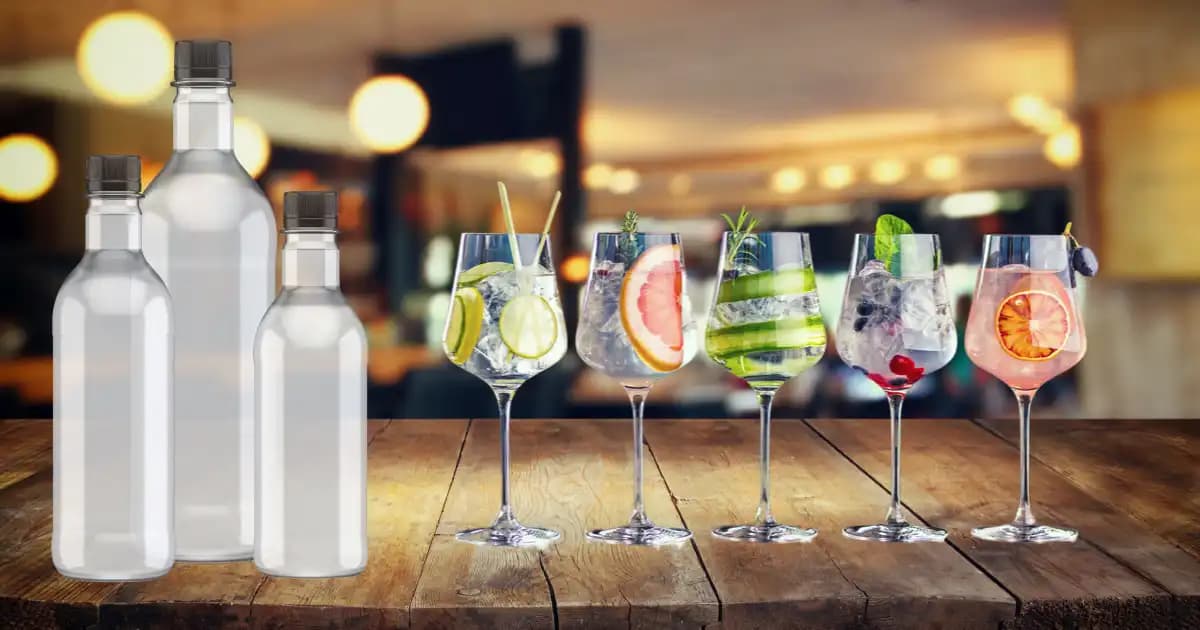
By utilizing high-clarity resins and optimized preform designs, we provide a solution that is technically indistinguishable from glass to the end consumer while offering an 88% weight reduction.
Based in Malmö, Niklas Zetterström is responsible for PET packaging sales across the Nordics. With his background in high-compliance food and beverage packaging and proximity to our Lidköping factory, he provides the technical bridge between traditional distilling and modern Packaging Technology.
Niklas Zetterström: "The Nordics, with its pure water and long distilling history, produces some of the world’s biggest spirits brands, especially in the vodka category. With these brands often citing the beauty of the regions they’re produced in, coupled with a Nordic focus on sustainability, it was only a matter of time before brands re-evaluated their packaging choices to make them greener."
We’re seeing more brands moving in the past year to turn their focus on the packaging as well and not just what is in the bottle. The shift for most is moving from glass to PET plastic bottles. Today you can get a PET bottle to look very similar to a glass bottle without impacting the taste the customer has grown to love, and it will never break if you accidentally drop it! We work with brands that really want to stand out on the shelf, so our offer of a bespoke PET bottle that offers a unique design for a fraction of the cost of a bespoke glass bottle is a strong proposition!"

In Sweden, Norway, and Finland, retail environments now utilize Climate Smart Packaging indicators. This transparency has forced a move away from energy-intensive glass manufacturing toward the Logistics & Costs benefits of PET.
Niklas Zetterström: "If you go into an alcohol shop in Sweden, Norway, and Finland, you will notice that next to the price and product information, there will be text signaling whether a product is packaged in ‘Climate Smart Packaging’. It means that this packaging has had less impact on the environment than a standard glass bottle. Less CO2 produced to make the bottle, and less CO2 produced to transport it."
It also means that a PET bottle with spirit in it can be returned to the refund station at your local supermarket and that bottle will be made into a new bottle, just like your standard soda bottle. By using a PET bottle, you will save on transport costs; our standard 0.35L bottle weighs just 24g compared to a typical weight of ~200g for its glass counterpart."
Petainer has worked with organic distiller BIOstilla, who produce in the north of Italy at Distillery Walcher. Their stringent measures mean that their raw materials are of the highest quality and the freshest possible. Putting trust in the packaging to maintain these attributes led them to choose our PET spirits bottle to reach the Nordic market. They are both able to save costs on transport and help the environment by doing so.
Niklas Zetterström: "It’s an important step to see whisky in PET, as it shows that consumers' perception of the product is still high despite not being in glass. Scotch and Irish whisky producers are careful to preserve their products which have aged for many years, so advocacy from them is an important indicator that moving to PET is a possibility across categories."
We know that PET bottles are just as good as a traditional glass bottle when it comes to spirits in preserving flavor. It also helps producers save on transport costs, as PET is lighter than glass; meaning more bottles per shipment, fewer breakages, and less CO2 produced doing so. Not only are there benefits for producers, it's opening up opportunities for consumers too."
With PET, consumers can take their favorite spirits on the move, for picnics, hikes and more. We have seen the move from the standard steel kegs to one-way PET kegs and now the spirits companies are following that same path."
Spirits are chemically stable and do not oxidize in the bottle, so they do not require active barriers. We have performed extensive migration tests to show that there is zero change in taste or flavor for any product under 97% ABV. This makes PET a technically neutral vessel for even the most complex aged malts.
Petainer Engineering Team
Unlike a generic water bottle, our spirit bottles are engineered with a flat base and reinforced neck finishes to ensure they perform on high-speed glass filling lines with minimal modification.
Niklas Zetterström: "Our PET Spirit bottle range is designed to substitute glass like-for-like, mimicking the clarity and shape associated with spirits bottles. Our aim was that for consumers, the experience of buying spirits was no different than normal but gave them the option to select a climate-smart option. For producers, our standard range includes spirit bottles at the key sizes of 0.35L, 0.5L, and 0.7L. With a modern design and flat base, they are the perfect solution."
| Technical Specification | PET Spirit Bottle (0.7L) | Standard Glass (0.7L) | Business Impact |
|---|---|---|---|
| Average Weight | ~50g | ~450g | 88% Reduction in freight mass |
| Impact Resistance | High (Shatterproof) | Low (Fragile) | Elimination of transit loss |
| CO2 per Unit | Low | High | Reduced Materials & Sustainability taxes |
| Recyclability | 100% (High rPET capability) | 100% (High energy) | PET is a primary cost-avoidance tool |
Most pressure-sensitive labeling (PSL) equipment used for glass is compatible with our PET spirit bottles. The dimensional consistency of PET often improves labeling accuracy compared to the slight variances found in molded glass.
Yes. Our testing covers spirits up to <strong>97% ABV</strong>. The polymer structure of PET is highly resistant to ethanol, ensuring no structural degradation or leaching occurs.
We specialize in bespoke design projects. Because PET tooling is significantly less expensive than glass molds, brands can achieve a unique, high-end look for a fraction of the traditional CapEx investment.
The transition from glass to PET is a technical evolution that reflects the modern reality of spirit distribution. By choosing PET, distillers maintain the flavor profile of their craft while drastically reducing the logistical overhead and environmental footprint of their brand.