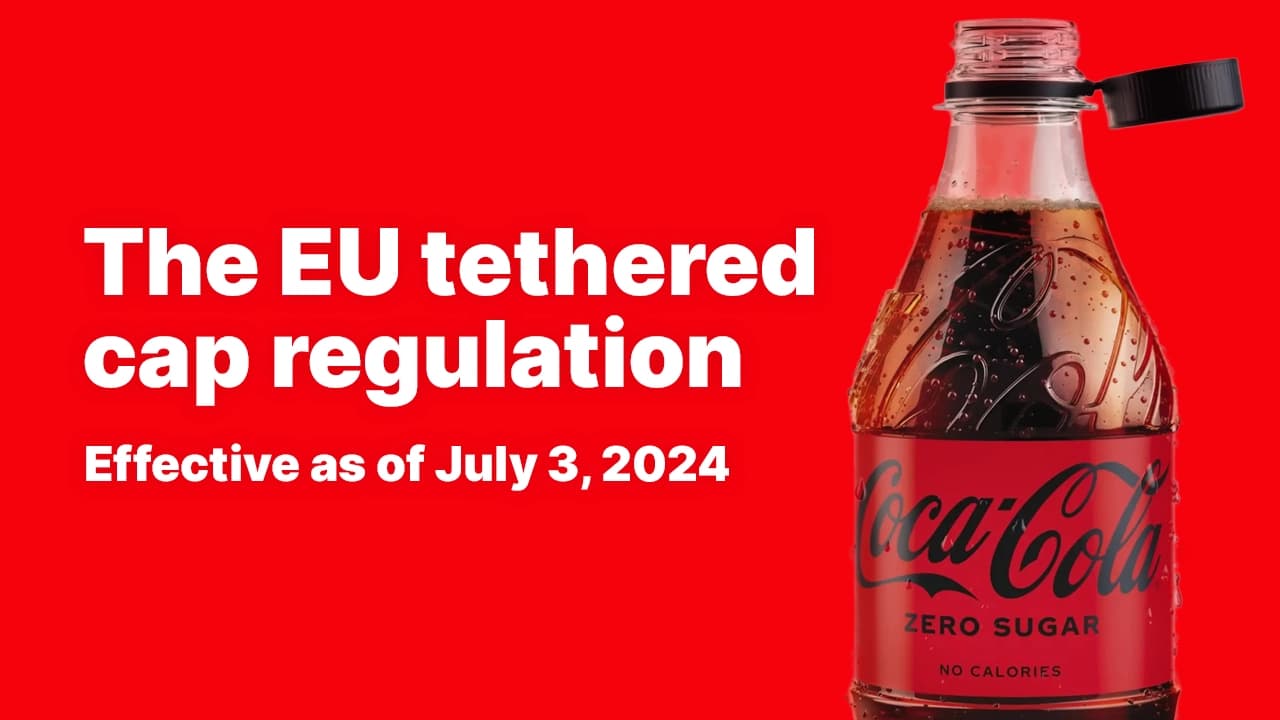
As of July 3, 2024, the European Union implemented one of the most visible packaging design changes in recent history. Under Article 6 of the Single-Use Plastics Directive (SUPD), all single-use plastic beverage containers with a capacity of up to three liters must have their caps or lids firmly attached to the container during their intended use. This regulation was designed to combat marine litter by ensuring the cap is recycled alongside the bottle, but it has forced massive operational shifts for beverage brands.
Complying with this mandate is far more complex than simply adding a piece of plastic string. Engineers must balance strict regulatory pull-force requirements (ensuring the cap doesn't easily break off) with a seamless consumer drinking experience. The industry has largely converged on two primary design solutions:
Transitioning to tethered caps often requires modifications to a brand's filling and capping machinery. Because the physical dimensions and application torque of a tethered cap differ from a standard screw cap, bottlers must recalibrate their lines to prevent cross-threading and maintain high-speed throughput. Furthermore, many brands used this regulatory deadline as an opportunity to implement Advances in PET Preform Engineering, adopting lighter, shorter neck finishes (such as the GME 30.40) to offset the cost of the new cap design.
While this mandate originated in the EU, its impact is global. Multinational brands seeking to streamline their supply chains are increasingly adopting tethered caps as their universal standard, rather than running dual inventories for EU and non-EU markets. If you are preparing your broader packaging portfolio for international compliance, ensure you understand the wider context by Navigating the EU Packaging and Packaging Waste Regulation (PPWR).
Ultimately, the tethered cap rule is about capturing high-quality material for recycling. By keeping the High-Density Polyethylene (HDPE) cap attached to the PET bottle, sorting facilities can recover both materials efficiently. To maximize the success of these recovery streams, brands must also focus on Designing PET Packaging for Recyclability, ensuring their labels and adhesives don't hinder the recycling process.