For high-volume beverage producers, purchasing pre-blown empty bottles is a logistical inefficiency that erodes net margins. Shipping fully formed containers forces brands to pay for the transport of "air", leading to inflated freight costs and an expansive, non-productive warehouse footprint.
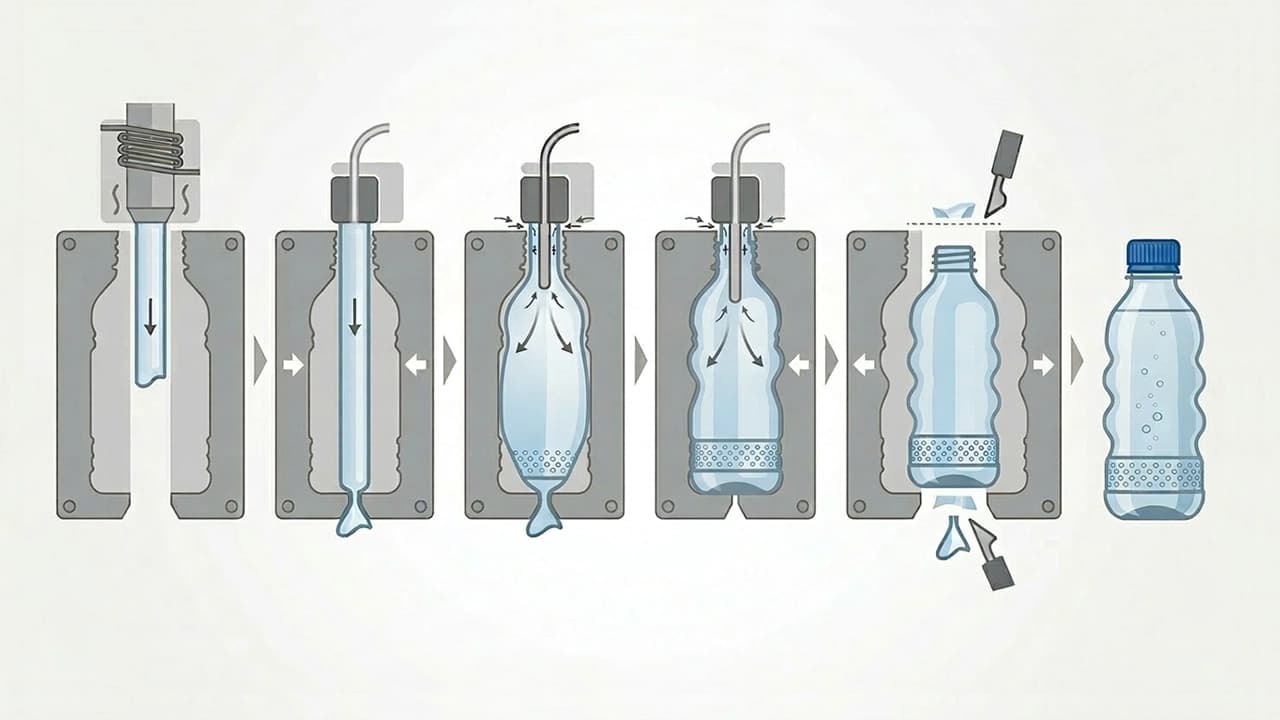
Transitioning to on-site bottle blowing allows manufacturers to vertically integrate their production, moving from a finished-goods procurement model to a lean manufacturing process.
By shipping high-density PET preforms instead of empty bottles, brands can achieve a 90% reduction in inbound truck movements, directly lowering their Packaging Cost Per Litre and insulating the supply chain against volatile fuel surcharges.
The primary economic driver for on-site bottle blowing is the volumetric density of the raw material. A standard 53-foot trailer can carry approximately 20,000 to 40,000 pre-blown 500ml bottles, depending on packing configuration. In contrast, the same trailer can transport over 800,000 PET preforms. This 20:1 ratio fundamentally alters the Logistics & Costs of a beverage operation.
While the transition to on-site bottle blowing involves an initial capital expenditure (CapEx) for Stretch Blow Moulding (SBM) machinery, the payback period is typically compressed for brands producing over 15 million units annually. The ROI is driven by the elimination of the "blow-up" margin charged by third-party converters and the drastic reduction in shipping frequency.
When we assist a brand in scaling to on-site blowing, the focus is on maximizing Overall Equipment Effectiveness (OEE). By utilizing precision-engineered preforms with consistent thermal profiles, we ensure the SBM equipment runs at peak cycle times with reject rates below 0.1%.
Petainer Engineering Team
| Expense Category | External Blowing (Pre-blown) | On-Site Bottle Blowing |
|---|---|---|
| Inbound Freight Density | Low (Freighting Air) | High (Preforms) |
| Storage Requirement | Massive Warehouse Footprint | Minimal Pallet Racking |
| Unit Margin | Includes Converter Profit | At-Cost Production |
| Quality Risk | High (Transport Damage) | Low (Direct Integration) |
Integrating the blowing and filling steps on a single line (often referred to as a "Combi" block) eliminates several points of failure common in the beverage industry. Pre-blown bottles are susceptible to contamination, ovalization, and scuffing during transit and depalletization.
By controlling the Packaging Technology on-site, engineers can make real-time adjustments to bottle weight and wall thickness distribution. This is critical when utilizing Oxygen Barrier Technology for sensitive products like beer or juice, as it ensures the barrier remains intact and uniform across the entire container surface.
In the 2026 regulatory landscape, reducing the number of inbound trucks is no longer just an environmental goal; it is a primary tool for avoiding carbon-based transport taxes and EPR penalties. As governments mandate higher Materials & Sustainability standards, the ability to ship more material in fewer loads becomes a significant competitive advantage.
Using high-percentage rPET preforms on-site further enhances this benefit. By blowing rPET containers at the point of fill, brands minimize the total mileage associated with the most carbon-intensive part of the packaging lifecycle: transport.
A modern linear or rotary blow moulder occupies a relatively small footprint, but you must account for the high-pressure compressor (up to 40 bar) and the preform hopper/elevator system.
Yes. On-site blowing equipment is highly versatile. Quick-change mold systems allow brands to switch between 330ml, 500ml, and 1L formats in under 30 minutes, providing the flexibility to react to market demand.
While the blowing process itself doesn't change the tax rate, the reduction in transport-related emissions helps meet Scope 3 targets, and the ability to use lightweighted preforms directly reduces the weight-based Packaging Regulations fees.
The shift to on-site bottle blowing represents a fundamental move toward manufacturing maturity. By eliminating the logistical burden of shipping empty containers, beverage brands can reclaim margin, optimize their facility's square footage, and gain total engineering control over their primary packaging.
The transition effectively turns a logistics problem into a manufacturing advantage.